
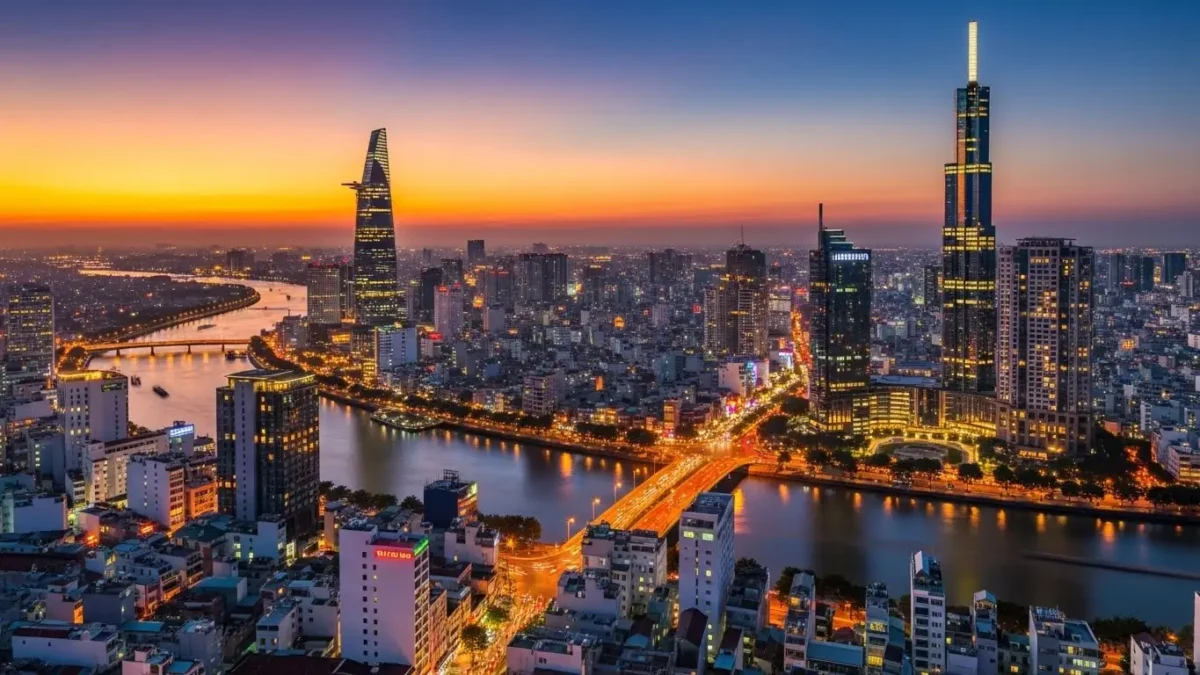
Vietnam is a year-round destination, but the best time to go to Vietnam depends on two things: where you’re going and what you want to spend. The north can feel surprisingly cool in winter, the central coast has a late rainy season, and the south stays warm with a clearer dry season rhythm. [Vietnam Tourism, 2023]. Vietnam Tourism+1
This guide keeps it simple. You’ll get regional seasons, festival timing, realistic budgets, transport comparisons, and safety tips for budget travelers and women.
TL;DR
- Best all-round window for multiple regions: March–April and often October–November for balanced conditions. [Vietnam Tourism, 2023]; [Intrepid Travel, 2024/2025]. Vietnam Tourism+2Intrepid Travel+2
- Best dry-season travel overall: roughly November–April, especially for the south. [Selective Asia, 2024/2025]. Selective Asia
- Central Vietnam caution: storms and heavy rain are more likely in autumn into early winter, with flood risk noted around September–November in places like Hue. [Vietnam Tourism, 2023]. Vietnam Tourism+1
- Cheapest vibe: rainy/shoulder periods can drop accommodation prices. This varies by season and provider. Check current prices before booking.
- Tet (Lunar New Year): amazing culture, but many businesses close and prices can rise; book early. [Tonkin Travel, 2025]. Tonkin Travel
- Solo women: generally comfortable in tourist areas, but use app-based or reputable taxis and take normal nightlife precautions. [UK FCDO, 2024]; [Smartraveller, 2025]. GOV.UK+1
Vietnam’s weather (North vs Central vs South)
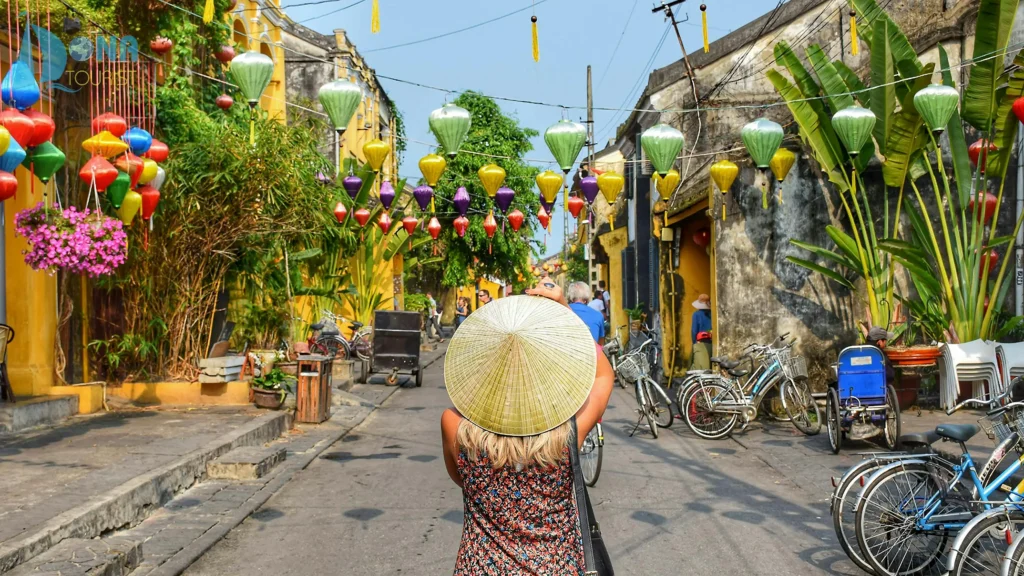
Vietnam stretches over 1,600 km, so “the weather in Vietnam” is never one story. Most good guides split the country into three travel climates. [Vietnam Tourism, 2023]. Vietnam Tourism
Quick region cheat sheet
- North (Hanoi, Ha Long Bay, Sapa): Hot, wet summers; cooler, drier winters. [Selective Asia, 2024/2025]. Selective Asia
- Central (Hue, Da Nang, Hoi An): Dry, hot stretch earlier in the year; wetter late rainy season with storm risk later. [Vietnam Tourism, 2023]. Vietnam Tourism+1
- South (HCMC, Mekong, Phu Quoc): Clearer split between dry months and rainy months. [Vietnam Tourism, 2023]. Vietnam Tourism
Best time to go to Vietnam for a multi-region trip
If you want to do north + central + south in one journey, the safest bet is to travel in March–April. Many sources flag these months as pleasant across much of the country with lower rainfall. [Vietnam Tourism, 2023]; [Intrepid Travel, 2024/2025]. Vietnam Tourism+1
October–November can also work for a multi-region loop, but watch the central coast forecast. [Designer Journeys, 2025]. Designer Journeys
Best time to visit Northern Vietnam
Best months: often October–November and March–April for comfortable city exploring and clearer Ha Long Bay conditions. [Designer Journeys, 2025]. Designer Journeys
What to expect
- Winter (Dec–Feb): can feel chilly in Hanoi and much colder in mountain areas. Some travelers love it for Sapa hiking with fewer crowds. [Selective Asia, 2024/2025]. Selective Asia
- Summer (May–Aug): hot and humid with heavier rain. This can still be fine for budget travelers who like lower prices and can handle a flexible itinerary.
Best time to visit Central Vietnam
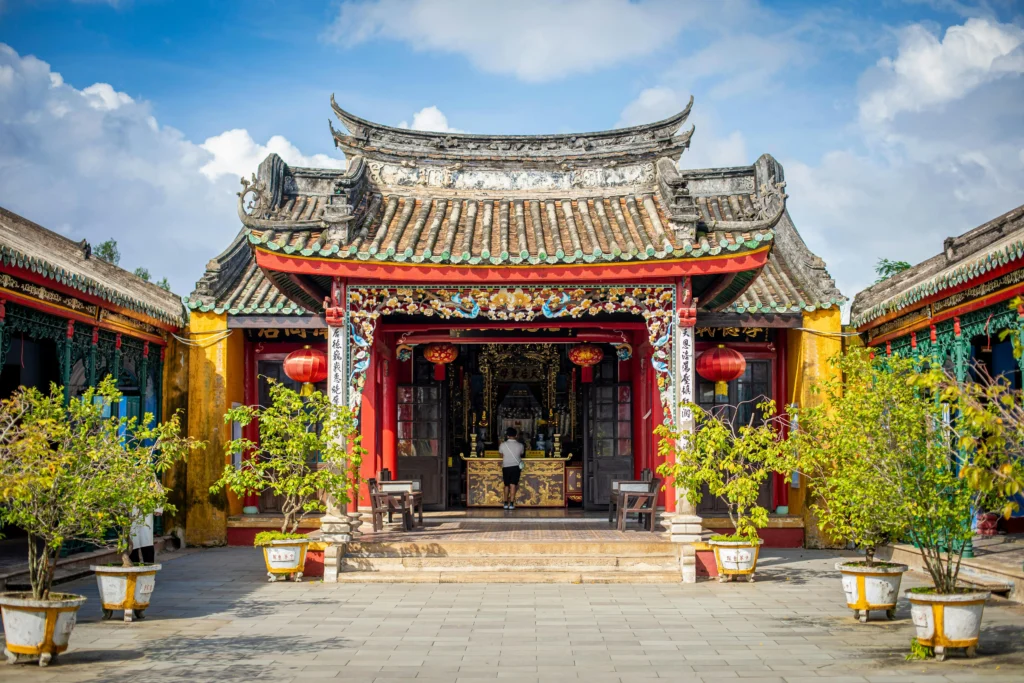
Central Vietnam is where timing really matters.
Dry, beach-friendly period: generally mid-January to late August for Da Nang and Hoi An-style coastlines. [Selective Asia, 2024/2025]. Selective Asia
Rain and flood watch: Hue’s wetter season can run September to February, with possible flooding from September to November. [Vietnam Tourism, 2023]. Vietnam Tourism
If your dream is lantern-lit Hoi An + sunny beaches, plan for spring or early summer. If you’re coming in autumn, keep indoor and food-focused backup plans.
Best time to visit Southern Vietnam
Best months: generally November/December to April for drier days in Ho Chi Minh City, the Mekong, and some southern islands. [Designer Journeys, 2025]. Designer Journeys
Rainy season travel can still be great if you’re price-sensitive. Expect quick downpours and strong humidity.
Festivals that affect crowds and prices
Festivals are part of the “best time” equation because they change prices, availability, and opening hours.
- Tet (Lunar New Year): late Jan to mid Feb (varies by lunar calendar). Many locals travel, some businesses close, and accommodation can spike. Book transport and hotels well ahead. [Tonkin Travel, 2025]. Tonkin Travel
- Hoi An Lantern Nights: monthly full-moon celebrations. Great for photos and evening walks; can be busier than usual on those nights. [Tonkin Travel, 2025]. Tonkin Travel
- Hung Kings’ Day: usually around mid-April. A meaningful cultural event that can increase domestic travel around the holiday. [Tonkin Travel, 2025]. Tonkin Travel
- Mid-Autumn Festival: typically mid-Sep to early Oct depending on the lunar calendar. Lantern celebrations are especially lovely in major cities and family areas. [IziTour, 2025]. Izitour
Travel costs by season

Vietnam remains one of Southeast Asia’s better-value countries, but prices are not flat year-round.
What tends to raise costs:
- Tet week
- Peak dry-season travel in popular beach and heritage hotspots
- Major school holiday periods
What tends to lower costs:
- Rainy periods
- Less tourist-heavy months outside major holidays
This varies by season and provider. Check current prices before booking.
Cost
These ranges assume two things:
- You mix local food with a few tourist-friendly meals.
- You use a blend of buses/trains/Grab rather than daily private drivers.
Baseline benchmarks suggest:
- Budget travelers: about $20–30/day with hostels and street food. [Vietnam Airlines, 2024/2025]. Vietnam Airlines
- Mid-range: about $50–90/day with private rooms and more paid activities. [Vietnam Airlines, 2024/2025]. Vietnam Airlines
Food-only estimates commonly range widely depending on style, with an average daily food spend cited around VND 200,000–1,400,000. [Vietnam Airlines, 2024/2025]. Vietnam Airlines
Shoestring
- Daily: $20–35
- 7 days: $140–245
- Includes: dorm bed, street food, local cafes, GrabBike or buses, a few low-cost attractions.
Mid-range
- Daily: $50–90
- 7 days: $350–630
- Includes: private room in a 2–3 star hotel, mix of street food + restaurants, a couple of tours, occasional GrabCar.
Comfort
- Daily: $90–140+
- 7 days: $630–980+
- Includes: higher-end hotels or boutique stays, more day tours, occasional domestic flights or private drivers.
This varies by season and provider. You can calculate travel cost by using a free calculator. Check current prices before booking.
Getting around Vietnam without overpaying
City transport: Grab vs taxi vs others
Grab is widely used in major cities and offers upfront pricing and in-app safety tools, which can reduce negotiation stress. [Grab, 2025]. Grab+1
Traditional taxi pricing varies by company and city. One recent guide summarizes typical structures such as base fare around 10,000–15,000 VND and per-km rates around 15,000–20,000 VND. [OneVasco, 2025]. OneVasco Blog
| Option | Best for | Typical cost notes | Safety/cost tips |
|---|---|---|---|
| GrabBike | Short solo trips in traffic | Often cheapest app option | Helmet check; keep bag in front |
| GrabCar | Comfort + luggage | Similar to metered taxis but fixed upfront | Great for airport rides |
| Street taxis | Quick hails | Rates vary by brand/company | Use reputable firms; insist on meter |
| Public buses | Ultra-budget | Very low fares | Slower; signage can be tricky |
Intercity: train vs sleeper bus vs flight
Sleeper buses
- Popular for budget routes.
- Price examples include Hanoi–Sapa ~250,000–350,000 VND. [Vietnam Airlines, 2025]. Vietnam Airlines
- HCMC–Da Lat listings often show a wide range like 150,000–500,000 VND depending on service tier. [Vexere, 2025]. Vexere.com
Trains
- Great for scenery and a bit more space.
- Example: Hanoi–Hue tickets can start around 483,000 VND and vary by class. [Vexere, 2025]. Vexere.com
Domestic flights
- Best when time is tight, especially for north-to-south jumps.
- Prices fluctuate more around peak holidays. This varies by season and provider. Check current prices before booking.
Route-level budget
These are transport-only ballparks based on published route ranges.
- Hanoi → Sapa (sleeper bus): ~250,000–350,000 VND. [Vietnam Airlines, 2025]. Vietnam Airlines
- HCMC → Da Lat (bus): ~150,000–500,000 VND depending on bus type. [Vexere, 2025]. Vexere.com
- Hanoi → Hue (train): from ~483,000 VND for lower classes; higher for sleepers. [Vexere, 2025]. Vexere.com
These are good planning anchors, not guarantees. This varies by season and provider. Check current prices before booking.
Safety, scams & women-specific tips
Vietnam is broadly manageable for tourists, but big-city caution still applies.
Common issues to plan for
- Taxi and gambling scams and card/ATM risks have been reported. Use ATMs in banks or reputable places and keep cards in sight. [Smartraveller, 2025]. Smartraveller
- Unlicensed taxi risks are a recurring warning. [UK FCDO, 2024]. GOV.UK
Practical tips for women travelers
- Prefer Grab or known taxi brands, especially at night or from airports. [UK FCDO, 2024]; [Grab, 2025]. GOV.UK+1
- In nightlife zones, watch drinks and don’t leave them unattended. Government advisories note reports of sexual assault linked to unlicensed taxis and nightlife settings. [UK FCDO, 2024]. GOV.UK
- Choose accommodation with 24/7 reception if you expect late nights.
- If you’re uncomfortable, step into a hotel lobby or busy cafe and order a Grab from there.
Common mistakes to avoid
- Planning a whole-country trip without checking regional seasons.
North, central, and south don’t peak at the same time. [Vietnam Tourism, 2023]. Vietnam Tourism - Ignoring Central Vietnam’s autumn rain/flood risk.
Hue and nearby areas can see heavy rain and flooding risk in the later part of the year. [Vietnam Tourism, 2023]. Vietnam Tourism - Arriving during Tet without pre-booking.
Transport and hotels can sell out or become pricier. [Tonkin Travel, 2025]. Tonkin Travel - Hailing random airport taxis.
Use app-based rides or official taxi queues when available. [Smartraveller, 2025]. Smartraveller - Overstuffing a 7-day itinerary.
Vietnam is long. Budget travelers often burn money by adding last-minute flights to “fix” an unrealistic route.