
Last updated: Nov 28 2025
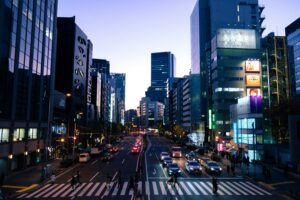
On a spring morning, central Shinjuku can feel surprisingly quiet. Office workers walk out of the station, shops start to open and Shinjuku Gyoen’s lawns sit just far enough away that you hear more birds than traffic. By evening, the same streets are bright with neon lights in Kabukicho, glowing lanterns in Golden Gai and the sounds of small yakitori bars.
This article is for visitors who want to enjoy both sides of Shinjuku, but who do not want to feel lost in the middle of the world’s busiest train station.
Shinjuku at a glance
Shinjuku is one of Tokyo’s main western centres. It is a busy mix of train lines, shops, offices and nightlife built around JR Shinjuku Station. The Japan National Tourism Organization and the Tokyo city tourism board both describe it as a major base for first-time visitors.
The best times to visit for comfortable weather and park walks are late March to April for cherry blossoms and November for autumn leaves. Shinjuku Gyoen’s official site publishes current opening hours and seasonal details each year.
Many first-time travellers find that one full day and evening in Shinjuku, plus a few extra evenings if they stay nearby, is enough to see the park, enjoy the views and explore some nightlife.
Good areas to stay include the following.
- The east side is useful for nightlife and shopping.
- The south side and Shinjuku-sanchome area offer a more relaxed walk to Shinjuku Gyoen and Busta Shinjuku.
- Nishi-Shinjuku on the west side has larger hotels and a slightly calmer atmosphere at night.
What to do by area

Shinjuku feels easier to understand when visitors divide it into a few small zones. Around the station, they can think in terms of the station core, the east side, the south side, the west side and the nearby Shin-Okubo area.
Around the station core
The station itself is the main anchor. JR Shinjuku Station is the central hub. It is served by the JR Yamanote Line, JR Chuo Line and other lines. It is surrounded by department stores and underground shopping passages. JR East’s official English map shows ticket offices, travel service centres, elevators, coin lockers and barrier-free routes. It is worth checking this before arrival.
Just outside the station, visitors will find several useful places.
- Department stores such as Odakyu and Keio on the west side, and Lumine and Takashimaya on the south side, all have reliable food halls in their basements.
- Underground shopping arcades allow people to cross under busy roads. On hot or rainy days, these passages are also a more comfortable way to move between exits.
- Busta Shinjuku is the long-distance bus terminal on the south side above the station. It is a key landmark for buses to Mount Fuji and many other regions.
Travellers who worry about getting lost often find it helpful to choose two or three big buildings, such as a department store, the bus terminal and their hotel, and treat them as fixed points they can always walk back to.
East side: Kabukicho, Golden Gai and Hanazono Shrine
The east side is the part of Shinjuku that many people imagine first. It has bright signs, arcades, cinemas and many small bars. Tokyo’s official tourism site describes Kabukicho as an entertainment district that includes cinemas, restaurants and more adult venues.
Key places on the east side include the following.
- Kabukicho has a large gate, game centres, the Godzilla Head above the Toho building and many restaurants. Families who prefer a calmer feeling often choose to walk here earlier in the evening, when it feels more like a busy shopping area.
- Golden Gai is a small area of narrow alleys filled with tiny bars. Each bar has its own character. Some welcome visitors clearly, while others are mainly for regulars. Many bars charge a cover fee and expect at least one drink per person.
- Hanazono Shrine is a Shinto shrine only a short walk away. It offers a quieter space during the day and holds several festivals throughout the year.
In 2025, for example, the Shinjuku Eisa Festival is scheduled for July 26, 2025, and will bring traditional Okinawan dance performances to the streets around the east and west exits. Hanazono Shrine is due to hold its famous Tori-no-Ichi markets on November 12 and November 24, 2025, filling the grounds with decorated rakes and food stalls.
Dates change every year, so visitors should always check the latest event listings close to their travel dates. The main streets and the approach to Hanazono Shrine are fairly wide. However, some alleys in Kabukicho and Golden Gai are narrow and can be difficult for wheelchairs and strollers.
South side: Shinjuku Gyoen and Shinjuku-sanchome
The south-east side of Shinjuku feels calmer. Shinjuku Gyoen National Garden is one of Tokyo’s most popular parks. It has Japanese, English and French-style gardens and large lawns. According to the official garden guide, adult admission is ¥500 as of 2025, with fixed opening hours and a last entry time each day.
Most main paths are paved and quite flat, which helps visitors who use wheelchairs or strollers. Some small side paths are more uneven. The park has accessible toilets and an information centre, and details are updated on the official site.
The nearby Shinjuku-sanchome area is a collection of mid-rise buildings, fashion shops and cafés. It connects to Shinjuku Station both above and below ground. The Tokyo Metro Marunouchi Line and Toei Shinjuku Line serve Shinjuku-sanchome Station, and the station page shows which exits have elevators and escalators.
This part of Shinjuku suits visitors who want fast access to the station but also value quieter streets and easy access to the park.
West side: Nishi-Shinjuku and the Tokyo Metropolitan Government Building
The west side, or Nishi-Shinjuku, is Shinjuku’s business district. It has tall office towers, wide pavements and a calmer feeling in the evening.
The main attraction here is the Tokyo Metropolitan Government Building. The official Tokyo tourism site highlights its free observation decks, which offer clear views over the city when the weather is good. Visitors may need to wait 20 to 30 minutes or more during busy hours because of security checks and elevator capacity.
This area has many large hotels with slightly bigger rooms and a quieter nightlife. It can be a good base for families or light sleepers who still want to be close to Shinjuku Station.
Side trip: Shin-Okubo (Korea Town)
Just one stop north of Shinjuku on the JR Yamanote Line, Shin-Okubo is often called Tokyo’s Korea Town. It has K-pop shops, Korean BBQ restaurants, street snacks and beauty stores.
Travellers can easily combine a few hours in Shin-Okubo with a visit to Shinjuku. Late morning or lunchtime on weekdays is a good choice for those who want to avoid the busiest crowds. At weekends, the streets can become very crowded and the pavements are narrow in places, so travellers with small children or mobility aids may need to move slowly and carefully.
Eating and drinking
Shinjuku’s food scene is about variety rather than one famous restaurant. Visitors will usually find something that suits their taste and budget within a short walk.
Where to eat
- Omoide Yokocho near the west side of JR Shinjuku Station is a lane filled with small yakitori bars and tiny eateries. Many places only have a few seats. Diners are expected to eat and then leave rather than stay all night.
- Golden Gai is better suited to drinks than full meals. Some bars serve simple snacks, but the main draw is the atmosphere and conversation.
- Department store food halls in Odakyu, Keio, Takashimaya and other stores are ideal for takeaway meals, salads and sweets. They are also a good way to see seasonal foods in one place.
- Quick lunch options such as noodles, curry and chain cafés are available around every major exit. They are useful when travellers are tired and want something straightforward.
Simple etiquette in small bars and eateries
In small bars and restaurants, a few basic points help visits go smoothly.
- Seats are limited, especially in Golden Gai, where many bars seat only five to ten people. A cover fee and one-drink minimum are common. It is fine to stay for just one drink if the bar clearly welcomes visitors.
- Photography is not always welcome. Owners may not like photos of other guests, especially regulars. Asking politely first and accepting the answer is good practice.
- Some older bars still allow smoking. People who prefer smoke-free spaces may wish to choose brighter, modern venues that display non-smoking signs.
- Tipping is not expected. Service charges or cover fees are usually part of the bill, and guests pay the amount shown without adding a tip.
Getting around

A simple look at the rail network
Shinjuku is a major rail hub. Important lines include the following.
- The JR Yamanote Line connects Shinjuku with Shibuya, Harajuku, Ueno and Tokyo Station in a loop.
- The JR Chuo Line (Rapid) and Chuo–Sobu Line (Local) provide fast and local east–west travel, including access to Tokyo Station and western suburbs.
- The Tokyo Metro Marunouchi Line links Shinjuku and Shinjuku-sanchome with central stations such as Ginza and Tokyo Station.
- The Toei Oedo Line and Toei Shinjuku Line connect Shinjuku to other parts of the city, including Roppongi, Tsukiji and the eastern suburbs.
JR East, Tokyo Metro and Toei all provide English route maps and station pages. These official sites are the best places to check for current service notices, planned engineering work and barrier-free information.
Arriving from Narita and Haneda
From Narita Airport, the Narita Express (N’EX) train runs directly to Shinjuku Station. JR East’s official timetable and fare list shows that a one-way reserved seat in an ordinary car between Narita Airport Terminal 1 and Shinjuku costs about ¥3,250 as of July 1, 2025.
From Haneda Airport, travellers often use a combination of airport rail (Tokyo Monorail or Keikyu Line) and JR or Metro services. Another option is an airport limousine bus that stops at large hotels around Shinjuku. The operators’ websites and the airport site provide current routes and expected travel times.
Most trains stop running around midnight. The exact time of the last train depends on the line and the day of the week. It is important to check last-train times on the operator’s timetable pages for the specific date of travel.
If travellers do need a taxi late at night, it is helpful to know in advance that longer rides can become expensive. Many people like to estimate potential costs before they travel by using a neutral Japan taxi fare calculator such as https://herdigitaldesk.com/japan-taxi-fare-calculator/.
IC cards and passes
Most visitors use a prepaid IC card for most journeys and sometimes add a short-term subway pass.
- Welcome Suica and standard Suica are prepaid cards from JR East that work on JR lines, subways and many buses. The official site explains how to buy and use them.
- PASMO is a similar card issued by private railways, and it works in the same gates. The PASMO official site has English information for visitors.
- The Tokyo Subway Ticket offers 24, 48 or 72 hours of unlimited travel on Tokyo Metro and Toei subways. Tokyo Metro’s ticket page lists adult prices in 2025 as ¥800, ¥1,200 and ¥1,500 respectively.
Travellers who plan several subway journeys each day may save money with a Tokyo Subway Ticket. Travellers who mainly use the JR Yamanote Line or take only a few rides per day may find that a Suica or PASMO card is simpler.
Handling luggage
Luggage is one of the main practical challenges in Shinjuku. Coin lockers and left-luggage counters are available in and around the station, but large lockers fill early on busy days. JR East’s station map shows locker locations and the barrier-free routes to reach them, including elevators and ramps.
Japan also offers same-day and next-day luggage delivery services between airports and hotels. Airlines and logistics companies describe these services on their own sites. They can be a good choice for travellers who would otherwise carry heavy suitcases through crowded station passages.
Travellers who are still planning their trip may find it useful to think carefully about how many bags they bring and how often they will move hotels. A simple baggage planning tool such as https://herdigitaldesk.com/japan-trip-baggage-planner/ can help them think through these choices before they book.
Example times and costs
USD shown at ≈ 1 USD = ¥155; check live rates.
The following table gives example trips to help with planning. Travellers should always confirm exact fares on the operators’ sites.
| Trip (one way) | Approx time | Approx fare (¥) | Approx fare (USD) |
|---|---|---|---|
| Narita Airport → Shinjuku (Narita Express) | ~1 hr 30 min | 3,250 | ≈ 21 |
| Haneda Airport → Shinjuku (rail combination) | 40–60 min | ~1,200 | ≈ 8 |
| Shinjuku → Shibuya (JR Yamanote Line) | ~7 min | ~170 | ≈ 1.10 |
| Shinjuku → Tokyo Station (JR Chuo Rapid) | ~15 min | ~210 | ≈ 1.35 |
| Shinjuku → Asakusa (JR + Metro combination) | 30–35 min | ~330 | ≈ 2.15 |
These examples come from JR East and Tokyo Metro fare tables and represent typical routes. Different route choices can change times and fares.
Sample half-day and full-day plans
Classic Shinjuku day: quiet morning and bright evening
A classic Shinjuku day can follow a simple pattern.
- In the morning, visitors can go to Shinjuku-sanchome and then walk to Shinjuku Gyoen near opening time. This timing offers a quieter park experience, especially in blossom season. On the way back, they can pick up snacks or bento in a department-store food hall.
- In the afternoon, they might rest at their hotel or explore shops and underground arcades around the station.
- In the evening, they can have an early dinner near Omoide Yokocho, then walk through Kabukicho and, if they feel comfortable, finish the night with a drink in a clearly visitor-friendly Golden Gai bar.
In November, if their visit matches Tori-no-Ichi dates such as November 12 or November 24, 2025, they can add a stop at Hanazono Shrine to this route.
Half-day for views and shopping
Visitors who have a half-day can start in mid-afternoon and walk to the Tokyo Metropolitan Government Building for a sunset or early evening view from the observation deck. They can then walk back through Nishi-Shinjuku to the station and spend an hour or two exploring Takashimaya or Lumine before returning to their base.
Half-day focused on food with Shin-Okubo
For travellers who like Korean food and pop culture, a simple half-day might look like this.
- They can spend late morning in Shin-Okubo for snacks, K-pop shops and beauty stores.
- They can return to Shinjuku in the early afternoon for coffee and Japanese sweets.
- In the early evening, they can take a short walk through Kabukicho’s main streets and then head back to a quieter neighbourhood to sleep.
Frequently Asked Questions
Is Shinjuku a good base for a first trip to Tokyo?
Shinjuku is a practical base for many visitors. It offers easy rail access in several directions, a wide range of hotels and many food options within a short walk. People who prefer very quiet streets at night may choose Nishi-Shinjuku, which is a little calmer, or stay in another neighborhood and visit Shinjuku for a day and evening rather than sleeping there.
How long does it usually take to get used to Shinjuku Station?
Most travelers feel confused on the first day and noticeably more confident by the second or third day. Following the color-coded signs from JR, Tokyo Metro and Toei, and checking the official station maps, makes a big difference. Many people also find it helpful to choose one or two exits they use most often, so they become familiar with the same routes.
What should solo travelers know about Kabukicho at night?
Kabukicho’s main streets are busy with visitors, and there is an obvious police presence. Solo travelers should still use basic caution. It is sensible to avoid bars with aggressive touts, to be careful of very cheap “all-you-can-drink” offers, and to choose places with clear price lists. Many solo visitors simply walk through to see the lights and atmosphere and then choose bars or cafés in other areas.
Is Shinjuku manageable with a stroller or wheelchair?
The main roads and Shinjuku Gyoen are generally manageable, especially for those who use elevators marked on JR East and Tokyo Metro maps. The narrowest alleys in Omoide Yokocho and Golden Gai can be difficult to navigate with a stroller or wheelchair. Station concourses are very crowded at rush hour, so traveling outside peak times is usually more comfortable.
When does a subway pass make more sense than using an IC card?
A Tokyo Subway Ticket is useful on days with several journeys on Tokyo Metro and Toei subways, because it offers unlimited travel for a fixed price. On days with only a few trips, or when most travel is on JR lines such as the Yamanote Line, a Suica or PASMO IC card is usually enough. It is always best to check the latest prices and conditions on the official Tokyo Metro and Toei websites before deciding.
How much money should someone plan for a day based around Shinjuku?
Costs vary depending on where a person eats and shops. A typical day might include a few short train rides, one paid attraction such as Shinjuku Gyoen and simple meals. Travelers who want to see how a Shinjuku day fits into their full Japan budget can use a neutral trip budget tool, such as this Japan trip cost calculator , to test different spending scenarios.
Key Takeaways
- Shinjuku is both a practical base and a lively entertainment district, with a major park, a free observatory and a key bus terminal as well as nightlife.
- Dividing the area into small zones makes walking and planning much easier.
- Official operator and park sites are the best sources for up-to-date fares, opening hours and service changes.
- IC cards work well for most visitors; subway passes are most useful on heavy subway days.
- With some preparation on exits and luggage, Shinjuku is manageable for first-timers, families and solo travellers.
Sources
- JNTO – Shinjuku overview: https://www.japan.travel/en/destinations/kanto/tokyo/shinjuku/
- Tokyo Metropolitan Government / Go Tokyo – Shinjuku area guide: https://www.gotokyo.org/en/destinations/western-tokyo/shinjuku/index.html
- Shinjuku Gyoen official English guide and visitor information: https://www.env.go.jp/garden/shinjukugyoen/english/2_guide/guide.html
- JR East – Shinjuku Station map, Narita Express information and fares: https://www.jreast.co.jp/en/e/stations/e866.html, https://www.jreast.co.jp/en/multi/nex/
- Tokyo Metro – Shinjuku Station and Tokyo Subway Ticket pages: https://www.tokyometro.jp/lang_en/station/shinjuku/index.html, https://www.tokyometro.jp/en/ticket/travel/index.html
- Toei Transportation – tickets overview: https://www.kotsu.metro.tokyo.jp/eng/tickets/
- PASMO – visitor information: https://www.pasmo.co.jp/visitors/en/
- Shinjuku Eisa Festival and Hanazono Shrine event listings: https://www.gotokyo.org/en/spot/ev056/index.html, https://www.shinjuku-eisa.com/
- X-Rates – USD/JPY 2025 monthly average rates: https://www.x-rates.com/average/?from=USD&to=JPY&year=2025