

Scope: This article helps first-time visitors, families, seniors, and winter-sports travelers decide if insurance is necessary, what coverage actually matters in Japan, and when to buy. It references official guidance on “cashless” treatment, emergency hotlines, and typhoon monitoring so readers can make confident, up-to-date choices without overspending on features they won’t use. (Japan Travel)
Q: Is travel insurance legally required to enter Japan in 2025?
No. As of August 21, 2025, Japan does not mandate travel insurance for entry. However, Japanese authorities strongly recommend purchasing comprehensive medical and evacuation coverage because treatment can be expensive and some facilities expect upfront payment unless your insurer arranges “cashless” billing. That official stance appears consistently across current embassy and tourism pages. (Embassy of Japan in the US, Japan Travel)
Q: So…do travelers actually need it in practice?
Yes—practically. Medical care is excellent, but costs can escalate quickly after accidents or sudden illness. JNTO urges visitors to secure insurance in advance, noting many travelers benefit when insurers coordinate direct billing. The Embassy of Japan reiterates the recommendation, emphasizing peace of mind and financial protection throughout a trip. The prudent choice is to buy before departure. (Japan Travel, Embassy of Japan in the US)
Q: What counts as “cashless medical treatment,” and how does it work?

“Cashless” means the clinic or hospital bills your insurer or assistance partner directly so you don’t pay large sums on site. JNTO outlines this coordination model and directs travelers to the 24/7 Japan Visitor Hotline for guidance during emergencies. Always confirm your policy includes assistance able to arrange cashless care where available. (Japan Travel)
Q: What coverage limits make sense for Japan specifically?
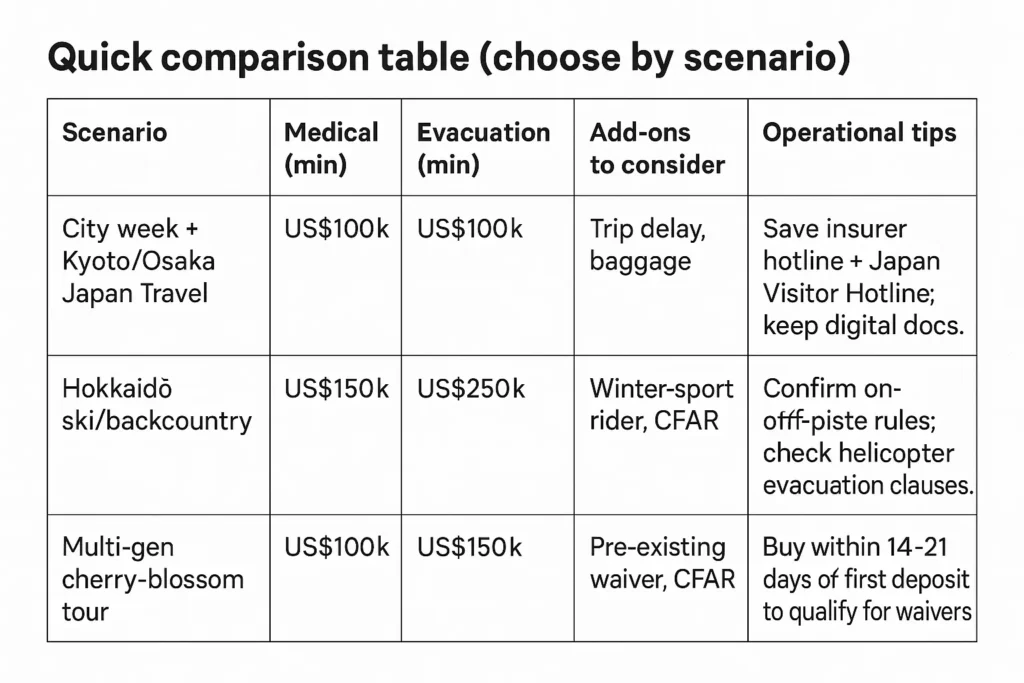
Aim for robust medical and evacuation ceilings. Many experienced advisors suggest ≥ US$100,000 for emergency medical and US$100,000–250,000 for medical evacuation, scaling higher for remote islands or ski trips. Pair that with 24/7 assistance, clear claims steps, and trip interruption/delay protection to cover logistical snags common in busy seasons. Balance price only after matching needs. (Japan Travel)
Q: Are earthquakes or typhoons covered—and how should travelers monitor risks?
Insurers often cover disruptive events when policy wording includes natural disasters and the timing meets their “unforeseeable event” rules. For situational awareness, follow the Japan Meteorological Agency Typhoon Center before and during travel; its English pages provide live cyclone and weather information relevant to itinerary decisions and claim documentation. (jma.go.jp)
Q: When should insurance be purchased to unlock the best benefits?
Buy before departure. Pre-existing condition waivers and CFAR (Cancel For Any Reason) usually require purchase within 14–21 days of the first trip payment and insuring the full non-refundable cost. JNTO notes some policies can be purchased after arrival, but benefits may be narrower and won’t retroactively satisfy early-purchase windows. (jnto.go.jp)
Q: Who should travelers call in an emergency—and what if language is a barrier?
Call the insurer’s emergency assistance line first to open a case, confirm network facilities, and request cashless arrangements. As a backstop, JNTO’s Japan Visitor Hotline operates 24/7 in English, Chinese, and Korean, helping with referrals and practical advice during incidents. Save both numbers in the phone and itinerary notes. (Japan Travel)
Q: What about recent headlines hinting at future insurance requirements?
Trade media reported that Japan was exploring mandatory visitor insurance, but as of today there is no official, implemented requirement. Travelers should rely on current embassy/JNTO pages and recheck closer to departure in case policies change. If a mandate emerges, authorities will publish specifics and enforcement details. (Skift, Embassy of Japan in the US)
Quick comparison table (choose by scenario)
Q: Bottom line—do I need travel insurance for Japan trip?
Legally, no; functionally, yes. The combination of possible upfront payments, language friction, and seasonal disruptions makes coverage a smart, low-regret purchase. Choose strong medical and evacuation limits, confirm cashless coordination, and lock in timing-sensitive options early. Keep official hotlines handy and monitor weather from trusted Japanese sources throughout the journey. (Japan Travel, jma.go.jp)
References
- JNTO: Travel insurance guidance and Visitor Hotline (24/7 multilingual). (Japan Travel)
- Embassy of Japan (USA): Insurance strongly recommended for visitors. (Embassy of Japan in the US)
- Japan Meteorological Agency: RSMC Tokyo—Typhoon Center (cyclone tracking). (jma.go.jp)
- JNTO: Note on policies purchasable after arrival in Japan. (jnto.go.jp)