
Last updated: Dec 01 2025
Quick answer:
For most visitors in 2026, the safest time to see cherry blossoms in the big cities is March 25–April 7, 2026. Tokyo, Kyoto and Osaka usually bloom then. If someone comes earlier, they can try Okinawa or Kawazu in February–early March. For later trips, Tohoku and Hokkaido work in late April to early May.
Overview: Main windows in 2026
Japan’s national tourism office says that cherry blossoms normally open sometime between March and May, and move from south to north across the country. You can see that in the cherry blossom pages from the Japan National Tourism Organization.
For 2026, detailed forecasts will come closer to the season. Until then, travelers can use recent years as a guide:
- Best overall for first-time visitors:
March 25–April 7, 2026 for Tokyo, Kyoto and Osaka. - Early season before mid-March:
Okinawa, and early-bloom trees in Kawazu and Atami. - Late season after mid-April:
Tohoku and Hokkaido, often from mid- to late April into early May.
When blossoms usually appear
Here is a simple look at typical bloom times, based on recent patterns. These are not exact dates for 2026, but they are realistic planning windows.
USD shown at ≈ 1 USD = ¥155; check live rates.
| Region / City | Usual viewing time (recent years) | Good “target week” for 2026 | Suggested base city |
|---|---|---|---|
| Okinawa (Naha) | Mid-Jan to early Feb | Jan 20–Feb 5, 2026 | Naha |
| Kawazu / Atami | Late Feb to early Mar | Feb 25–Mar 10, 2026 | Kawazu / Atami |
| Fukuoka / Hiroshima | Late Mar to early Apr | Mar 25–Apr 3, 2026 | Fukuoka / Hiroshima |
| Tokyo | Late Mar to early Apr | Mar 27–Apr 3, 2026 | Central Tokyo |
| Kyoto / Osaka | Early Apr | Apr 1–7, 2026 | Kyoto / Osaka |
| Kanazawa / Nagoya | Late Mar to early Apr | Mar 30–Apr 6, 2026 | Kanazawa / Nagoya |
| Sendai / Hirosaki | Mid- to late Apr | Apr 18–27, 2026 | Sendai / Hirosaki |
| Hakodate / Sapporo | Late Apr to early May | Apr 25–May 3, 2026 | Hakodate / Sapporo |
Tourism boards and weather agencies publish their 2026 forecasts in the months before the season. JNTO’s cherry blossom pages and local city sites are the best places to confirm dates as the trip gets closer.
What to do in each region

Tokyo and the Kanto area
Tokyo is where many trips begin. In 2025, the city forecast put first bloom around March 22, with full bloom about a week later, according to the official Tokyo travel site. 2026 will not be identical, but late March to early April is a good bet.
Main viewing spots
- Ueno Park
A long walkway with trees on both sides, food stalls and a very lively feel. It’s gentle and mostly flat, but extremely packed by late morning on weekends. People who dislike crowds should come early. - Chidorigafuchi and Kitanomaru Park
A moat with cherry trees leaning over the water. During blossom season, visitors can rent rowboats. The paths have slopes and can be narrow when busy, which may be difficult for wheelchair users and strollers. Boat lines can take an hour or more on peak days. - Sumida Park (Asakusa)
Cherry trees along the river with Tokyo Skytree views. It’s popular at sunset and in the evening when lanterns are on. - Shinjuku Gyoen
A paid park with lawns and a mix of tree types, including some that bloom a little earlier or later. Alcohol is restricted, so the atmosphere is calmer than in Ueno. Paths are wide and mostly flat, and there are accessible toilets, which helps wheelchair users and families. - Meguro River
A narrow riverside walk with trees that form a sort of pink tunnel during peak bloom. Because the paths are tight, it gets very crowded in the evenings when lanterns and food stalls are open. This can be tough for pushchairs and visitors who need more space.
Nearby early and late options
- Kawazu and Atami (Shizuoka Prefecture)
These towns have early-blooming cherry trees in late February and early March. They are useful for travelers who arrive before the main season. Local tourism sites share dates and event details each winter. - Fuji Five Lakes (Lake Kawaguchi and Chureito Pagoda)
Around early–mid April, visitors sometimes see snow on Mount Fuji and blossoms by the lake. Timing shifts each year, so Yamanashi tourism should be checked for 2026 updates.
Kyoto, Osaka and the Kansai region

Kyoto and Osaka usually reach full bloom a few days after Tokyo. The Kyoto City Cherry Blossom Calendar shows many spots hitting their peak in the first week of April in 2025, and the same pattern is likely for 2026.
Kyoto highlights
- Philosopher’s Path
A small canal lined with trees between Ginkaku-ji and Nanzen-ji. It’s lovely but narrow in parts. Surfaces are stone or gravel, and some areas can be tricky for wheelchairs or people with balance issues. - Maruyama Park and Yasaka Shrine
The park’s famous weeping cherry tree and lanterns draw big crowds at night in peak season. It can feel very busy and noisy in the central area. Those who prefer quiet may want to visit in the morning. - Temples and gardens with illuminations
Places such as Nijo Castle, Heian Shrine and Kiyomizudera often run special night openings during blossom season, usually listed on the Kyoto tourism website once dates are fixed. Most require entry tickets and include some stairs.
Osaka and nearby
- Osaka Castle Park and Nishinomaru Garden
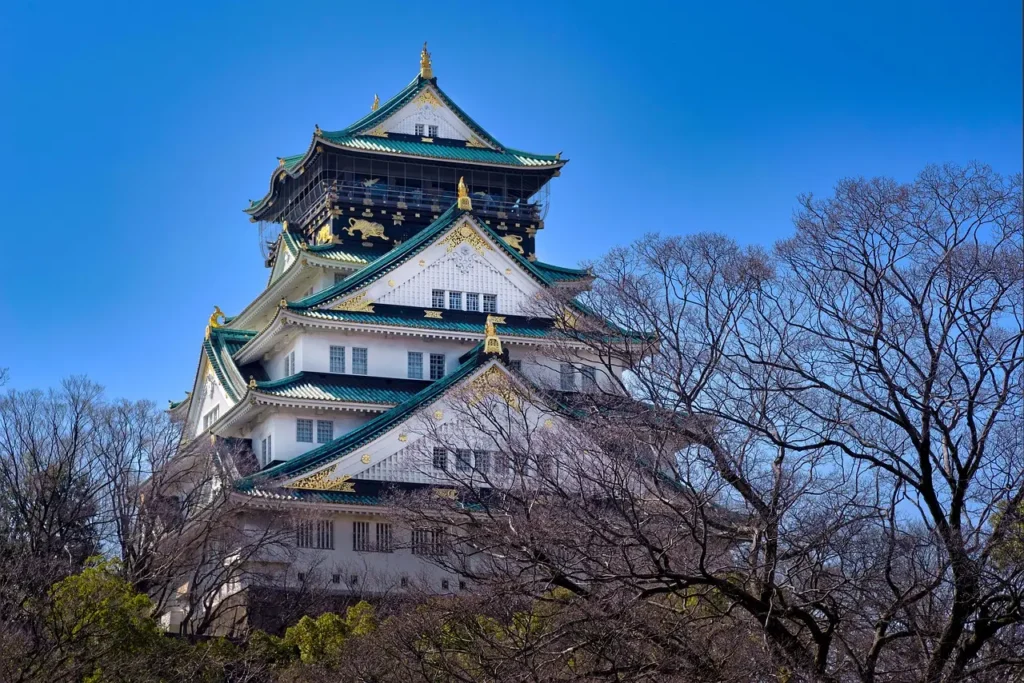
Osaka Castle is surrounded by cherry trees. The outer park has mainly flat paths and is easy for wheelchairs and strollers. The inner garden sometimes charges entry and offers evening illuminations. Event information and any fees appear on the Osaka tourism and castle websites each year. - Kema Sakuranomiya Park
Long riverside walks under cherry trees. It’s good for a relaxed stroll and spreads crowds out more than smaller parks. - Nara Park and Mt Yoshino
Nara Park is mostly flat, while Mt Yoshino, which is famous for hillside views of blossoms, has steep slopes and steps. Those with mobility limits may prefer the lower areas.
Tohoku and Hokkaido
If a visitor can’t travel until later in spring, the north of Japan offers a second chance.
- Hirosaki Park (Aomori)
This park has a castle, moats and hundreds of trees. The Hirosaki Cherry Blossom Festival has recently been held around late April to early May, and details for 2026 will appear on the Hirosaki tourism site. Paths are mostly level, but there are some bridges and slopes near the castle. - Takada Castle Site Park (Niigata)
Known for night views with blossoms, lanterns and reflections on the water. The park is mentioned on JNTO’s list of famous blossom sites, and dates are confirmed closer to spring. - Hokkaido (Hakodate and Sapporo)
Cherry trees usually open in late April or early May in Hokkaido. The Hokkaido tourism board notes that places such as Goryokaku Park in Hakodate and Maruyama Park in Sapporo are key viewing spots. Paths there are generally wide, but crowds still gather on weekends and holidays.
How to get around
Japan’s railway network is often the easiest way to move between cities.
Long-distance trains
- Japan Rail Pass
The main nationwide pass is explained on the official Japan Rail Pass site. Prices changed on October 1, 2023, and as of late 2025 a 7-day ordinary pass is around 50,000 yen. It may help those who plan several long train trips in one week. - JR East Pass (Nagano, Niigata)
The JR East website lists this pass, which is useful for travel between Tokyo, Nagano and Niigata. It can work well for late-season trips that include places like Takada or other northern areas. - Kansai Area Pass (JR West)
The JR West site covers this pass. It’s designed for travel between Osaka, Kyoto, Nara, Kobe and nearby cities, and is handy for a Kansai-focused itinerary. - Fuji Hakone Pass (Odakyu)
The Odakyu Electric Railway offers this three-day pass, which includes trains and other transport around Hakone and the Fuji area. It suits travelers based in Tokyo who want a short side trip.
When booking trains, it is wise to reserve seats in advance around the busiest days: late March and early April, weekends, and national holidays.
City transport and taxis
Within cities, rechargeable IC cards (now evolving into new card and mobile options) make buses, subways and local trains simple. These cards can be topped up at ticket machines and convenience stores.
Taxis can be helpful after a late night or for people who find steps and long walks difficult. To avoid surprises, travelers can estimate costs for common routes with a simple online tool such as this Japan taxi fare calculator.
Most major stations show step-free routes on maps. However, some smaller stations still rely on stairs between platforms, so travelers using wheelchairs or pushing strollers may want to look at station layouts in advance when possible.
How much a spring trip might cost
Costs vary by city and by comfort level. The table below gives rough daily ranges for a spring trip in 2026.
USD shown at ≈ 1 USD = ¥155; check live rates.
| Category | Budget (USD/day) | Midrange (USD/day) | Higher comfort (USD/day) |
|---|---|---|---|
| Lodging (per room, 2 people) | 60–120 | 140–260 | 280+ |
| Food and drink | 25–45 | 45–80 | 80–130 |
| City transport | 6–12 | 8–15 | 10–20 |
| Intercity trains (averaged) | 15–40 | 20–50 | 30–60 |
| Sightseeing & extras | 10–25 | 20–40 | 40–70 |
These are typical during busy times, especially from late March to early April 2026 in Tokyo, Kyoto and Osaka. Hotels in onsen towns and famous hot spring areas also tend to cost more during blossom weeks.
Travelers who like to see the full picture—flights, trains, hotels and local costs—can plug their plans into a simple Japan trip cost calculator before they book.
Practical tips: timing, luggage and where to stay
Someone who wants a high chance of seeing blossoms should consider 10 to 14 nights in Japan. A balanced plan could be:
- 6–8 nights split between Tokyo, Kyoto and Osaka around March 25–April 7, 2026
- 4–6 nights in a later-bloom region such as Tohoku or Hokkaido from April 18–May 3, 2026
Staying close to big stations—Tokyo Station or Shinjuku in Tokyo, Kyoto Station in Kyoto, Osaka or Shin-Osaka in Osaka—cuts down walking with luggage and makes day trips easier.
For luggage, less is more. A cabin-size suitcase and small daypack are usually enough if travelers use coin lockers or luggage-forwarding services. A structured Japan trip baggage planner can help people decide what really needs to move with them.
Mistakes to avoid
- Believing there is one “perfect date” for the whole country
Japan is long, and bloom dates differ by region. It’s safer to pick a week that works for the main cities, then add an early or late-bloom area as a backup. - Planning a very short trip
A stay of three or four nights in one city leaves little room if the season shifts. A longer trip with two or more bases is more forgiving. - Ignoring crowds and queues
Central parks and riverside walks can be very busy on weekends. Early mornings or weekdays often feel calmer. - Overpacking
Large suitcases are hard to manage on busy trains and station stairs. Smaller cases and smart use of lockers or forwarding make moving days much easier. - Waiting too long to book
Blossom season is one of Japan’s busiest times. Hotels near train hubs and Shinkansen seats at popular times can sell out weeks ahead.
Key Takeaways
- Most first-time visitors should aim for late March to early April 2026 for the Tokyo–Kyoto–Osaka area.
- Early and late-bloom places like Okinawa, Kawazu, Tohoku and Hokkaido give extra chances on either side of that window.
- Official tourism and railway sites are the safest sources for dates, prices and any changes.
- A calm trip depends not only on timing, but also on realistic travel days, light luggage and thought for accessibility.
- Booking transport and beds early matters more than chasing a single perfect date.
Sources used (official)
- Japan National Tourism Organization – Cherry blossoms overview: https://www.japan.travel/en/things-to-do/nature/cherry-blossoms/
- JNTO – Cherry blossom timing FAQ: https://faq.japan-travel.jnto.go.jp/en/faq/articles/102007
- Go Tokyo – Hanami and cherry blossom guide: https://www.gotokyo.org/en/story/guide/hanami-guide/index.html
- Kyoto City Tourism Association – Cherry Blossom Calendar: https://kyoto.travel/en/seasonal-info/cherryblossom/
- Hirosaki City / Hirosaki Park – Cherry Blossom Festival: https://www.hirosaki-kanko.or.jp/en/edit.html?id=cherry_blossom_festival and https://www.hirosakipark.jp/sakura/
- Hokkaido Tourism Organization – Sakura feature: https://www.visit-hokkaido.jp/en/feature/sakura
- Japan Rail Pass – Prices and validity: https://japanrailpass.net/en/purchase/price/
- JR East – JR EAST PASS (Nagano, Niigata area): https://www.jreast.co.jp/en/multi/pass/eastpass_n.html
- JR West – Kansai Area Pass: https://www.westjr.co.jp/travel-information/en/tickets-passes/jrwest-rail-pass/
- Odakyu Electric Railway – Fuji Hakone Pass: https://odakyu-global.com/passes/fuji-hakone-pass/