
Last updated: Nov 27 2025
Tokyo and Kyoto are the two cities most visitors put at the heart of a Japan trip. One is modern and busy, the other is famous for temples, gardens, and older streets. The good news is that they’re well connected, and the trip between them is easier than it might look on a map.
This guide explains, in clear steps, how far it is, how long the main routes take, what they cost, and which option suits different kinds of travellers. It also links to official Japanese sites so you can double-check times and prices before you book.
How far is Kyoto from Tokyo, and how long does it take?
On high-speed rail maps, the two cities sit on the same main line: the JR Tokaido Shinkansen. Kyoto is roughly 500 km from Tokyo along this route, and the fastest trains cover that distance in just over two hours.
Japan’s national tourism body says it “takes roughly 2 hours from Tokyo to Kyoto by Shinkansen bullet train”, and notes that you can also travel by plane or night bus.
On the Tokaido Shinkansen line, there are three main train types:
- Nozomi – the fastest. It usually takes about 2 hours 10 minutes from Tokyo to Kyoto.
- Hikari – a bit slower, because it stops at more stations. It normally takes about 2 hours 40 minutes.
- Kodama – all-stops. It can take around 4 hours between Tokyo and Kyoto.
These times can change slightly with timetable updates, so it is always worth checking the latest details on JR Central’s timetable and Tokaido Shinkansen information pages before you travel.
Step-by-step: Going by Shinkansen (bullet train)
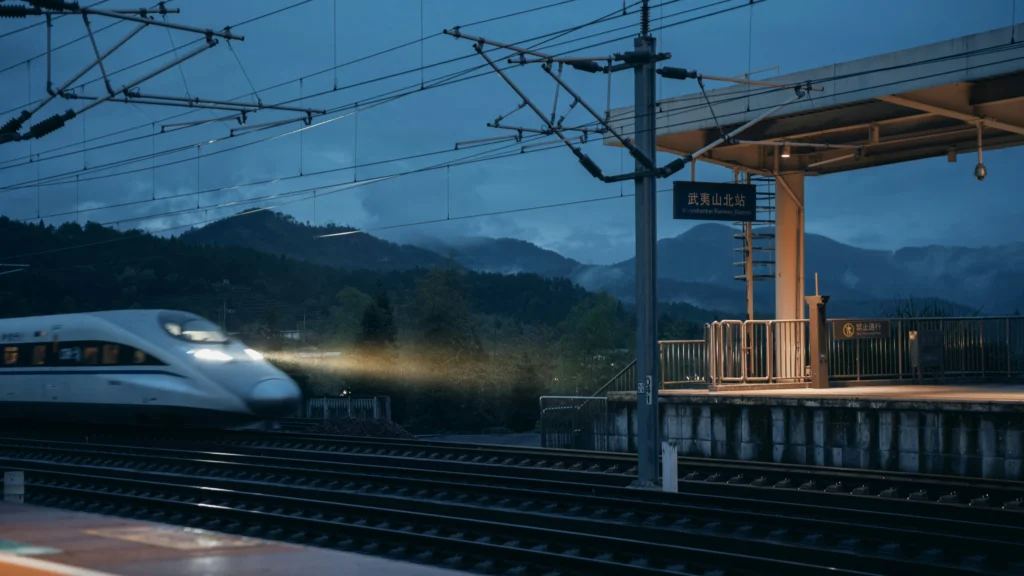
For most people, the bullet train is the best mix of speed, comfort, and simplicity.
1. Decide which station to use in Tokyo
You’ll usually leave from one of two stations:
- Tokyo Station – best if you’re staying around Tokyo Station, Marunouchi, Ginza, or you arrive there on JR lines from places like Ueno or Akihabara.
- Shinagawa Station – very convenient if you’re staying in the south of Tokyo or coming from Haneda Airport on JR or Keikyu lines.
JR East’s official pages for Tokyo Station and Shinagawa Station have English maps. These show where the Shinkansen gates are, as well as elevators, escalators, and barrier-free toilets for wheelchair users and families with strollers.
2. Get to the Shinkansen concourse
From your hotel:
- Use an IC card like Suica or PASMO, or a regular ticket, to ride local JR or subway lines to Tokyo or Shinagawa.
- In the station, follow the large signs with “Shinkansen (新幹線)”. These lead you to the JR Central Tokaido Shinkansen area.
If you have a stroller, wheelchair, or big luggage, it helps to check the station maps in advance and note where the elevators are. Both stations are large and can be confusing if you are in a rush.
3. Buy or collect your Shinkansen ticket
You can get tickets in three main ways:
- Ticket office (JR ticket counter). Staff can explain seat types and help you choose Nozomi, Hikari, or Kodama.
- Ticket machines. These have English menus and are useful if you already know the date and time.
- Online booking through JR Central’s official Shinkansen Online Reservation / smartEX system, then collect at the station.
JR Central’s “Fares & Surcharges” section explains how the basic fare and the Shinkansen “superexpress” surcharge are combined to give the total price.
There are also discount products:
- Special Kodama packages. For example, as of Oct 14, 2025, JR Central lists a one-way Kodama package between Tokyo and Kyoto from ¥10,700 in ordinary car for departures Monday to Thursday outside peak seasons.
- Early-bird online tickets such as EX Hayatoku-21, which can offer a lower fare on some dates if you book at least 21 days in advance. The smartEX site shows an example Tokyo–Kyoto early-bird price of ¥11,820 for adults, one way.
If you use a Japan Rail Pass, note that the standard pass usually covers Hikari and Kodama, but not Nozomi. To ride Nozomi you may need a separate, specific product if offered for pass holders; always confirm on JR’s official pass pages before you plan around this.
4. Board the right train
Your ticket will show:
- Departure station (Tokyo or Shinagawa).
- Departure time.
- Train type (Nozomi, Hikari, Kodama).
- Car number and seat number (for a reserved seat).
On the platform, look for the car numbers painted on the ground or on signs. Non-reserved cars are clearly marked. If you travel at very busy times such as Golden Week (May 1–6, 2025), Obon (Aug 10–16, 2025), or New Year (Dec 28, 2025–Jan 5, 2026), a reserved seat is usually more comfortable.
Most Shinkansen cars have overhead space for medium suitcases. For very large luggage, JR now has oversized baggage rules on the Tokaido Shinkansen. If your bag is over a certain size, you must book a dedicated oversized baggage seat or space in advance, which you can do when reserving your seat. JR Central explains this on its travel information pages.
5. Arrive at Kyoto Station
You will arrive at Kyoto Station, which is a major hub for JR lines, local trains, subway lines, city buses, and airport and sightseeing buses. The Kyoto City tourism site and JR West both offer clear station maps that show Shinkansen platforms, central exits, bus terminals, taxi ranks, elevators, and barrier-free toilets.
If you are staying in central Kyoto, a common pattern is:
- Leave via the Central Gate.
- Either walk or take a city bus or taxi from the north side of the station.
Build in extra time if you use a stroller or wheelchair, because you may need to follow a slightly longer elevator route rather than the main staircases.
Other ways: bus, flight, and car
Bullet trains are the default choice. However, other options may suit some travellers better.
Highway buses
Several companies run highway buses between Tokyo and Kyoto. You can search and book in English through operator and multi-operator sites like Willer Express, Japan Bus Lines, and Kosokubus.com.
Key points:
- A one-way bus trip usually takes about 7–10 hours, depending on the route and stops.
- Buses can be daytime or overnight, which can save you a hotel night if you sleep well on moving vehicles.
- According to JNTO’s guide to overnight buses, a simple four-seat-per-row Tokyo–Kyoto ticket can be as low as ¥2,000, while more private or peak-season tickets can reach around ¥13,700. A mid-week ticket in March may cost around ¥4,000, while Golden Week departures can start around ¥10,200.
Most long-distance buses have narrow stairways and limited space. If you have reduced mobility, a wheelchair, or a bulky stroller, buses can be less comfortable than trains. JNTO and individual bus operators explain facilities and accessibility in more detail on their official pages.
Flights via Osaka
There are also frequent flights from Tokyo (Haneda or Narita) to the Osaka region (Kansai International Airport or Itami Airport). From there, you travel on to Kyoto by train or limousine bus. Kyoto’s official tourism site lists these options on its “Getting to Kyoto” page.
In simple terms:
- Flight time is about 1 hour.
- But when you add airport transfers, check-in, and security, the full door-to-door time often becomes 3–4 hours.
- Flying is most useful for open-jaw tickets (for example, fly into Tokyo and out of Kansai) or if you are already near an airport.
Driving
You can also drive between Tokyo and Kyoto using expressways that broadly follow National Route 1.
The distance by road is longer than the direct rail distance, and the trip usually takes 5–6 hours or more, not counting rest stops. You’ll also pay expressway tolls and parking. For first-time visitors, this is rarely the easiest choice.
Time and cost comparison
USD shown at ≈ 1 USD = ¥150; check live rates.
The figures below are rounded, based on official train and bus information available in 2025. Always confirm exact prices and times with operators before you buy tickets.
| Mode and route | Typical time (door to door) | Typical one-way cost (¥) | Approx one-way (USD) | Who it suits best |
|---|---|---|---|---|
| Nozomi Shinkansen: Tokyo/Shinagawa → Kyoto | 2–2.5 hours | ~12,000–15,000 | ~80–100 | Most travellers, tight schedules |
| Hikari Shinkansen: Tokyo/Shinagawa → Kyoto | 2.5–3 hours | ~12,000–15,000 | ~80–100 | JR Pass users, those fine with a few stops |
| Kodama Shinkansen (with package deals) | 3.5–4+ hours | from ~10,700 (packages) | ~70+ | Time-rich, cost-conscious train fans |
| Highway bus (day or overnight) | 7–10 hours | ~2,000–13,700 | ~15–90 | Smaller budgets, slow travel fans |
| Flight via Osaka region + train/bus to Kyoto | 3–4 hours | ~10,000–20,000+ | ~70–130+ | Multi-city air tickets, airport stays |
Shinkansen fares and discount offers are explained on JR Central’s Fares & Surcharges and Shinkansen reservation pages. Highway bus ranges come from official operator and JNTO examples for Tokyo–Kyoto routes.
Last trains, late arrivals, and backup plans
The Tokaido Shinkansen does not run through the night. The last Nozomi or Hikari from Tokyo to Kyoto usually leaves late in the evening, but the exact time depends on the timetable for that date. JR Central’s English timetable is the best place to check your specific travel day.
A simple rule: if you are new to Japan, try to be at Tokyo or Shinagawa Station by around 21:00–22:00 if you still plan to go to Kyoto that night. This is not an official cut-off, but it gives you a buffer for delays, crowds, or getting lost in a big station.
If your flight into Haneda or Narita lands very late, it is often kinder on your body to stay near the airport or in central Tokyo, then take a morning Shinkansen to Kyoto. Trying to rush straight to a late-night bullet train with luggage and jet lag can be stressful.
If you do miss the last Shinkansen:
- A night highway bus may still have seats, and multi-operator sites let you search for last-minute buses from Tokyo to Kyoto.
- A long-distance taxi is technically possible but extremely expensive. If you are curious about how high such a fare might be, you can try a neutral Japan taxi fare calculator such as this one before you travel.
Luggage, accessibility, and planning ahead
Luggage
On the Shinkansen:
- Overhead racks fit medium suitcases and backpacks.
- Very large suitcases must follow JR’s oversized baggage rules on the Tokaido Shinkansen. This usually means booking a special seat with extra luggage space in advance.
Both Tokyo and Kyoto Stations have coin lockers and luggage services. Kyoto’s official guide and JR West’s station map show where some of these are placed inside and around the station.
If you are still deciding how many bags to bring or how often to change hotels, you might find it useful to sketch out your route and then test it in a simple tool like this Japan trip baggage planner. That can help you see which days involve the most carrying and transfers.
Accessibility
For travellers using wheelchairs, walking aids, or strollers:
- Tokyo Station and Shinagawa Station have elevators, accessible toilets, and staff who can help you. Station maps on the JR East site show step-free routes.
- Kyoto Station is also set up with elevators and barrier-free paths. JR West’s station map and the Kyoto City tourism site both show these clearly.
- Shinkansen trains normally have accessible toilets in specific cars, as well as priority seats and bookable spaces for wheelchairs. It is best to reserve these through a ticket office well in advance of busy periods.
Highway buses are less likely to be fully step-free. Many have narrow steps and aisles, so they may not suit everyone. JNTO’s guide to overnight buses and each operator’s own site are good places to review the details.
Frequently Asked Questions
How far are Tokyo and Kyoto, and how long does the bullet train take?
Tokyo and Kyoto are about 500 kilometers apart on the Tokaido Shinkansen route. The fastest Nozomi trains take around 2 hours 10 minutes, Hikari trains take about 2 hours 40 minutes, and Kodama services take roughly 4 hours. Exact times depend on the timetable for your travel date.
Can someone visit Kyoto as a day trip from Tokyo?
A day trip is possible, but it is long and quite expensive. You would spend around 4 to 5 hours on bullet trains plus time getting to and from stations, and you would pay close to the cost of a round-trip Shinkansen ticket in one day. Most visitors enjoy Kyoto more with at least one or two nights there.
Which station is better for this trip: Tokyo or Shinagawa?
If you stay near the Imperial Palace, Marunouchi, or Ginza, Tokyo Station usually makes more sense. If you stay in southern Tokyo or arrive at Haneda Airport, Shinagawa is often simpler. Travel time to Kyoto is very similar from both; the main difference is where you start your journey in Tokyo.
How much does a one-way Shinkansen ticket cost, and when were prices last updated?
Ordinary one-way fares between Tokyo and Kyoto are generally in the low- to mid-¥10,000 range, depending on seat type and train. Discount offers such as Kodama packages and early-bird online tickets can be cheaper on some dates. JR Central’s official fares and campaign pages show the current prices and the dates they apply from.
Is a Japan Rail Pass still good value for this route?
For just a single round trip between Tokyo and Kyoto, individual Shinkansen tickets are often cheaper than a full Japan Rail Pass, especially after the price increases in October 2023. The pass becomes better value if you plan several long-distance JR journeys within a short period.
How long does the highway bus take, and how much can it cost?
A highway bus between Tokyo and Kyoto usually takes from about 7 hours up to around 10 hours, depending on the route and stops. Example fares range from roughly ¥2,000 for simple seats on off-peak days to around ¥13,700 for more private seats or busy dates. Bus operator sites show current schedules and prices.
What should someone do if they arrive in Tokyo very late at night?
If a late flight leaves you unsure of catching the last bullet train, it is usually easier to stay near the airport or in central Tokyo and take a morning Shinkansen to Kyoto. As a backup, you can also look for late-night highway buses from Tokyo to Kyoto using multi-operator search sites, but seats may be limited.
How can this trip fit into a total Japan budget?
Many travelers treat the Tokyo–Kyoto leg as one of a few big transport costs in their Japan plans. To see how this fits alongside hotels, local transport, and food in both yen and US dollars, you can try a simple Japan trip cost calculator such as this one and adjust the values to match your dates and style of travel.
Key Takeaways
- Tokyo and Kyoto are about 500 km apart, and the bullet train makes the trip in around two to four hours depending on the train type.
- JR Central’s official pages are the best place to confirm exact Shinkansen fares, discount campaigns, and any timetable changes before you buy tickets.
- Highway buses and flights give cheaper or more flexible options for some travellers, but they are slower or involve more steps than the Shinkansen.
- Large stations and luggage rules are manageable if you check maps and baggage policies ahead of time and allow a little extra time for transfers.
Sources used
- Japan National Tourism Organization – FAQ on travel time from Tokyo to Kyoto/Osaka:
https://faq.japan-travel.jnto.go.jp/en/faq/articles/102039 - JNTO – “The Tokaido Shinkansen” pamphlet (distance and Nozomi time):
https://partners-pamph.jnto.go.jp/simg/pamph/2551.pdf - Kyoto City Official Travel Guide – Kyoto City Tourism Association:
https://kyoto.travel/en/ - Kyoto City Official Travel Guide – Getting to Kyoto:
https://kyoto.travel/en/getting-to/ - JR Central – Fares & Surcharges (Tokaido Shinkansen):
https://global.jr-central.co.jp/en/info/fare/ - JR Central – Fares & Surcharges PDF (how to read tables):
https://global.jr-central.co.jp/en/info/fare/_pdf/fare.pdf - JR Central – Special Kodama package prices (Tokyo–Kyoto) as of Oct 14, 2025:
https://travel.jr-central.co.jp/plan/en/ - JR Central – Shinkansen Online Reservation / smartEX (EX Hayatoku-21 example prices):
https://smart-ex.jp/en/lp/app/ - Willer Express – Highway bus booking:
https://willer-travel.com/en/ - Japan Bus Lines – Tokyo–Kyoto bus search:
https://japanbuslines.com/en/bus_search/tokyo/all/kyoto/all/ - Kosokubus.com – Highway bus search and Tokyo–Kyoto route examples:
https://www.kosokubus.com/en/ - JNTO – “A Practical Guide to Using the Overnight Bus to Make the Most of Your Japan Adventures”:
https://www.japan.travel/en/tokyo2020/overnight-bus-to-make-the-most-of-your-japan-adventures/ - Japan-Guide – “Getting there and around Kyoto” (overview of rail and bus options):
https://www.japan-guide.com/e/e2363.html - X-Rates – 2025 monthly average USD/JPY exchange rate:
https://www.x-rates.com/average/?amount=1&from=USD&to=JPY&year=2025